1. Header
-
Enterprise ID: F&N-FARMSTRUCT-0001
-
Enterprise Name: [TBD]
-
Region: Eastern Africa
-
Sector: Construction → Agri-Infrastructure & Modular Housing
-
Current Phase: Empathy (Updated: Oct 31, 2025)
-
Tag: #Farm
-
Enterprise Vision:
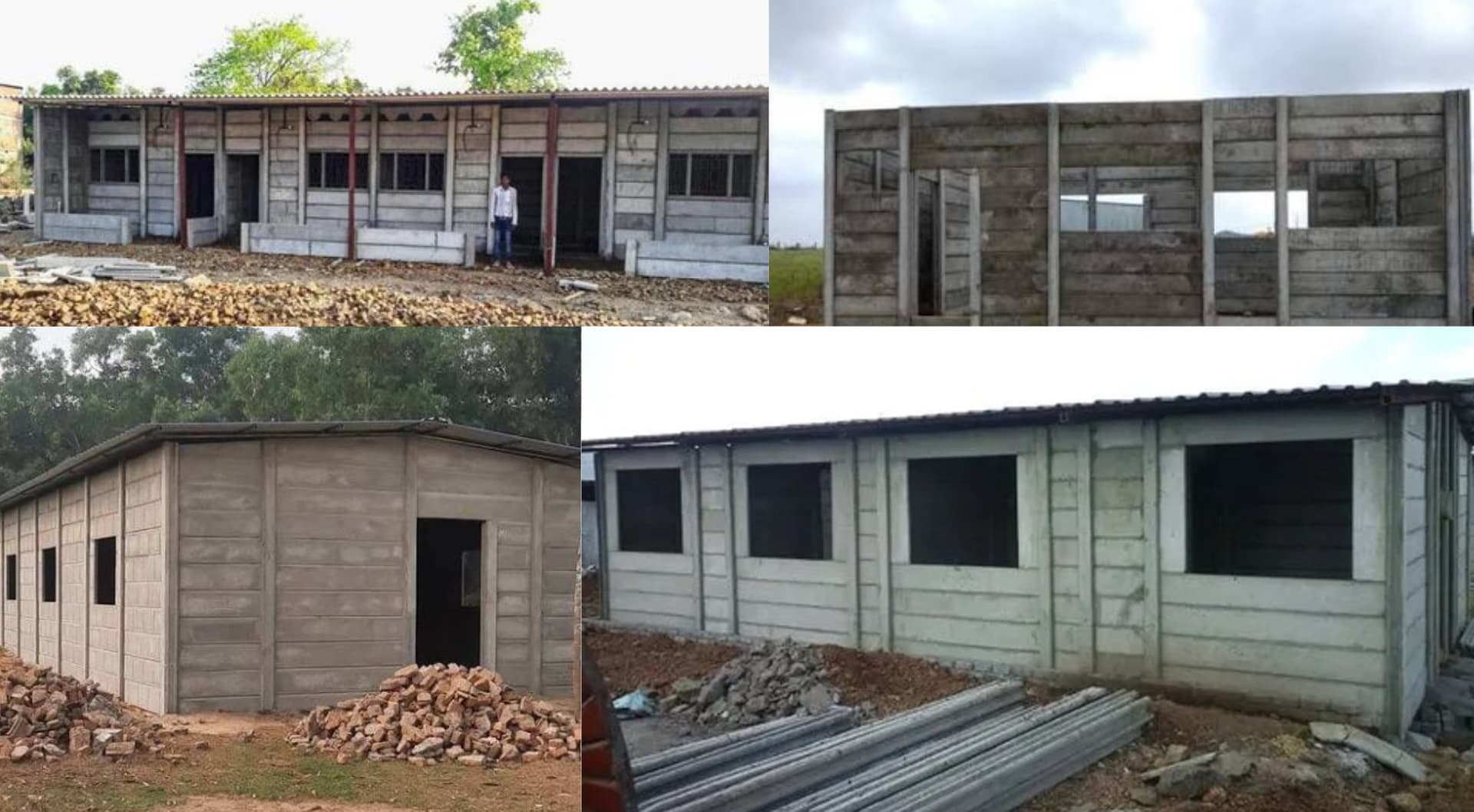
In 10 years, every smallholder farmer in Africa will be able to construct durable, affordable, and modular farm structures, from poultry houses and feed stores to greenhouses and dairy sheds, using standardized reinforced concrete H-beams and panels fabricated locally. This enterprise envisions transforming rural infrastructure by replacing costly, ad hoc, and unsafe structures with precision-engineered systems designed for scalability, local materials, and rapid installation. By leveraging open-source designs, local manufacturing hubs, and tokenized production incentives, the enterprise will create tens of thousands of jobs in fabrication, transport, assembly, and maintenance, building a sustainable foundation for Africa’s agricultural modernization.
2. Problem Opportunity Brief
Problem:
Across Africa, smallholder farmers and cooperatives face major challenges in constructing durable and hygienic farm structures. Most sheds, stores, and pens are built from timber, scrap iron sheets, or mud, leading to frequent collapse, pest infestation, poor ventilation, and biosecurity risks.
Kenya loses millions annually in post-harvest spoilage and livestock mortality due to poor housing. Timber costs have risen sharply due to deforestation bans, while skilled masons are scarce in rural areas. Farmers attempting to build permanent structures often face inflated labor costs, inconsistent quality, and long build times, frequently exceeding KES 400,000 for a medium poultry unit or feed store. Meanwhile, rural construction is largely informal and unregulated, with no standardization, sustainability guidelines, or scalable model to deliver quality at scale.
Opportunity:
Reinforced concrete H-beams and interlocking hollow panels can standardize rural construction, reducing costs by 30–50%, build time by 60%, and structural failure by over 80%. By introducing modular prefabrication using locally cast concrete elements, this system enables farmers to assemble durable and climate-resilient structures within days, without heavy machinery or skilled masons.
The approach can leverage local youth groups, small contractors, and county governments to establish micro-factories (community-backed production cells) producing standardized beams and panels under open-source manufacturing licenses.
Tokenized incentive systems can reward local producers for verified quality output, while enterprise validators ensure compliance, safety, and sustainability. The opportunity extends beyond agriculture to affordable housing, schools, and rural cold chains, forming a foundation for Africa’s infrastructural independence and job creation.
Why Now?
Market readiness: Over 10 BSF and agri-construction pilots across Africa prove modular, prefabricated systems can scale locally.
Technology synergy: Advances in AI design tools, tokenized incentives, and on-chain oracles now make traceable, community-verified production possible.
Urgency: Soaring global input and protein costs, accelerating climate risks, and the rural youth job crisis demand affordable, resilient infrastructure.
Differentiation: This enterprise is DAO-native yet locally rooted—transparent, job-creating, and non-extractive—aligning innovation with real community ownership.
3. Lean Business Model Canvas
| Component | Description |
|---|---|
| Problem | High cost, poor quality, and inconsistent farm structure builds; lack of modular designs; dependence on timber and informal masons. Alternatives: timber sheds, ad hoc concrete, imported prefab kits. |
| Solution | MVP: Develop and pilot standardized reinforced concrete H-beams and interlocking panels for poultry houses and feed stores. Locally cast molds, portable designs, and AI-assisted structural optimization. |
| Key Metrics | # of panels produced, # of farms upgraded, average cost reduction %, build time saved, jobs created in fabrication and installation. |
| Unique Value Proposition | “From Chaos to Concrete: Building Africa’s Farms on Solid Foundations.” Locally made, modular, job-creating construction systems. |
| Unfair Advantage | Open-source engineering designs, community-governed quality assurance, county partnerships, and tokenized microfactory networks. |
| Channels | Farmer cooperatives, youth groups, agri-SACCOs, county extension programs, the QLoJo platform, and social media (Facebook, WhatsApp). |
| Customer Segments | Early adopters: poultry and dairy farmers in Kenya. Scale: horticulture, aquaculture, and feed millers across Eastern Africa. |
| Cost Structure | Mold fabrication, concrete mix design, rebar, formwork, transport, training, and installation tools. MVP budget: KES 2.5M (~$20,000). |
| Revenue Streams | Beam/panel sales, installation packages, enterprise franchise licenses for micro-factories, token staking for quality validation, and county procurement contracts. |
4. Business Plan Outline
Note: Every validated invoice builds parts of the formal business plan:
-
Executive Summary: [from Impact + Marketing]
-
Company Description: [from Legal & Governance invoices]
-
Market Analysis: [from Survey + Mapping + Subsidy]
-
Organization & Management: [from Partnerships + AMA]
-
Products/Services: [from Ideation]
-
Marketing & Sales: [from Marketing + Survey]
-
Funding Request: [from Impact + Subsidy]
-
Financial Projections: [from Impact Analysis]
-
Risk Management: [from Risk Scoping]
-
Appendix: [All validated invoices & data]
5. Enterprise Registration Bundle
- Entity Type: Cooperative Society / Community-Governed Manufacturing Enterprise
- Steps: Legal registration, enterprise governance charter, and technical feasibility certification
- Documents Required: IDs, bylaws, technical drawings, safety compliance report
- Budget & Timeline: ~KES 350,000 ($2,800); ~8–10 weeks
6. Tokenomics & Capitalization Table
Token = Invoice NFT / Equity Instrument
Each validated invoice becomes a token (NFT) mapped to deliverables, rights, or dividends.
Sharing Model
| Actor | Share Range | Discount / Conditions |
|---|---|---|
| Contributors | 0–20% | Early access discount (e.g., 20%) |
| Community investors | 0–20% | Community rounds at a discount |
| External investors | Up to 80% | Market price |
| DAO Retention | ~1% (non-dilutable) | Reserved for platform stewardship |
7. Call to Action
Join the Farm Structures enterprise to design, prototype, and test Africa’s first modular concrete farm-building system.
Check this guide to understand how to contribute.
You can start right away by:
-
Picking an existing starter task:
-
Review the listed tasks below.
-
Reply to this post expressing interest in completing a specific task.
-
Refine it: specify the region, exact deliverables, timeline, and proposed invoice value. (You can choose to use AI prompts to refine it.)
-
Submit your refined task proposal using this Invoice Claim Template.
-
Moderators and admins will review and approve if it aligns and the task is open (we’ll track status: open, in progress, or assigned with contributor limits).
-
-
Proposing a task:
-
Use this Invoice Proposal Template to propose a new task for the enterprise.
-
Submit as a reply to the relevant post, ensuring alignment with the current stage (e.g., empathy).
-
Clearly define the task, outputs, region (if applicable), and proposed value.
-
If approved, the new task will be added to the task list.
-
-
Once approved:
-
Execute the task and submit your work using this Invoice Submission Template.
-
New invoice proposals earn a flat rate of KES 500 if your proposal is accepted.
-
Executed tasks (fieldwork, data collection, prototyping, etc.) are paid according to the agreed invoice once validated.
-
After validation of submitted tasks, your contribution is minted as an invoice NFT and added to the enterprise record, creating a smooth blockchain of contributions. Task statuses will be updated here for clarity.
-
8. Task Ledger
Purpose
A transparent, open ledger documenting all validated and open tasks for the Farm Structures Enterprise Proposal, part of the QLoJo ecosystem for local enterprise creation.Each task is traceable from idea → prototype → enterprise and mints an ARC-3 NFT invoice upon validation.
North Star : Jobs + Skills + Wealth
Open License : CC BY / CC0 / MIT / CERN-OHL
-
 = Open Tasks
 -
 = In Progress Tasks
 -
 = Done Tasks
 -
 = Validated Invoices
 -
 = Minted Invoices
 -
 Novated Enterprise
EMPATHIZE STAGE
Task 1. Cost Benchmarking (Farm Structures)
0 Task
Stage: Empathy Stage
Objective:
Collect data on the current costs of farm structures such as sheds, poultry houses, and feed stores. Include both material and labor costs from different localities.Deliverable: Spreadsheet summary + photos of local examples.
Submissions Allowed: Up to 3 contributors (from Central, Coast, Nyanza).
Invoice fee range: $23 – $38
Validated Invoice links:
Impact / Importance:
Establishes real-world cost references for community and youth-led construction microenterprises, grounding prototype costs in verified field data.Example: “In Bungoma, a 10x20 ft poultry house costs KES 85,000 to build using local sand and timber. Photos and an itemized cost breakdown are attached.”
Task 4. Farmer Interviews (Structure Needs)
Stage: Empathy Stage
Objective: Interview at least 10+ farmers about their farm structure challenges, desired materials, cost expectations, and durability concerns.
Deliverable: Interview summaries (one-page per respondent or combined report).
Submissions Allowed: Up to 3 contributors (covering Kisumu and Meru).
Invoice fee range: $27 – $47
Validated Invoice links:
Impact / Importance:
Captures user voice directly from the field, informing design standards that align with smallholder realities and environmental constraints.Example: “Meru dairy farmers prefer permanent sheds due to termite issues; average budget per unit = KES 60,000.”
DEFINE STAGE
Task 5. Standards Review
Stage: Define Stage
Objective: Review Kenya Bureau of Standards (KEBS) and county construction codes relevant to smallholder and rural concrete structures. Identify applicable strength and safety standards.
Deliverable: Detailed KEBS citations, County-by-county comparison, Standards gap analysis, 20-item compliance checklist, 10–15 supporting links
Submissions Allowed: Up to 1 contributors (National level).
Invoice fee range: $15-$28
Validated Invoice links:
Impact / Importance:
Provides a compliance foundation to ensure all microfactory prototypes meet regulatory and structural integrity requirements.Example: “KEBS KS EAS 18:2018 sets minimum compressive strength at 25 MPa for reinforced concrete; local county bylaws reviewed.”
Task 6. Impact Model
Stage: Define Stage
Objective: Model job creation, material savings, and community benefits if community-led concrete production is scaled in Kenya.
Deliverable: 20 input variables, 10 sensitivity tests, 5 comparison models (baseline, high adoption, etc.), Data imports from FAOSTAT, KNBS, KEBS, World Bank
Submissions Allowed: Up to 2 contributors.
Invoice fee range: $38 – $54
Validated Invoice links:
Impact / Importance:
Quantifies social and economic impact, providing measurable indicators for funders and public sector partners.Example: “Scaling 10 microfactories could create 120 jobs and reduce material costs by 25% compared to imported prefab kits.”
Task 7. Microfactory Setup Feasibility
Stage: Define Stage
Objective: Identify two potential sites and local partners (youth groups, SACCOs, or co-ops) suitable for setting up a pilot microfactory for beam and panel casting.
Deliverable: Feasibility note + partner contact list (shared privately with admins).
Submissions Allowed: Up to 2 contributors (covering 2 counties).
Invoice fee range: $38–$46
Validated Invoice links:
Impact / Importance:
Anchors the enterprise in real, investable community contexts by pre-selecting viable partners and facilities.Example: “Proposed site: Kimilili Youth Co-op in Bungoma; group owns 1-acre yard and can host casting mold setup.
Task 8. Refine Problem Statement
Stage: Define Stage
Objective: Refine the draft into a concise 1–2 paragraph definition that’s evidence-based and inspiring. Highlight causes, effects, and why the challenge matters for the Eastern Africa Farm Structures region.
Deliverable: Final 2-paragraph problem statement refined from empathy-stage submissions
Submissions Allowed: $19 – $27
Invoice fee range: {contributor to propose}
Validated Invoice links:
Impact / Importance:
Consolidates insights into a single, clear articulation of the challenge—providing narrative clarity for partners, funders, and prototype designers.
PROTOTYPE STAGE
Task 2. Prototype Beam Casting
Stage: Prototype Stage
Objective: Cast and test sample reinforced H-beams using locally available sand and cement ratios. Document the mixing process, curing time, and simple strength test results.
Deliverable: Photo log + basic strength data (crack test or load estimate).
Submissions Allowed: Up to 2 contributors (based in Bungoma).
Invoice fee range: $47–$59
Validated Invoice links:
Impact / Importance:
Provides proof-of-concept data for community-scale, low-cost structural systems adaptable across rural regions.Example: “Cast 4 H-beams using 1:3:5 mix ratio; minimal cracks after 10 days curing. Test photos and notes attached.”
Task 3. Design Mockups
Stage: Prototype Stage
Objective: Create CAD or digital design mockups for modular concrete panels suitable for a 10x20 ft poultry unit. Include design dimensions, connection points, and possible layout options.
Deliverable: CAD drawings + assembly diagrams (PDF or screenshots).
Submissions Allowed: Up to 2 contributors (from Nairobi).
Invoice fee range: $41–$47
Validated Invoice links:
Impact / Importance:
Enables replication, visual clarity, and scalable adoption of modular farm structures through open-source design assets.Example: “Design features interlocking side panels and a 3-panel roof frame. Drawings show modular transport setup.”
Contributor Acknowledgement
By submitting this invoice, I confirm that:
-
All information and deliverables provided are complete and accurate to the best of my ability.
-
This submission is provisional until the enterprise is formally incorporated.
-
I understand that QLoJo is not a debtor; if incorporated, the enterprise may adopt this record as payable.
-
Any future payment depends entirely on the enterprise’s ability to generate and allocate resources.
-
I acknowledge there is no guarantee of payment, regardless of submission, approval, or execution status.

 [ TASK ][ Kenya ][ QCK-Kenya#E-1 ] Urban Food Operations Field Validation])
 I have read, understood, and voluntarily accepted the above terms as a contributor participating in the QLoJo enterprise creation process.